
Categories
Home MaintenancePublished November 2, 2026
Daylight Saving Time Just Ended. Here Are 5 Home Safety Checks Most Ohio Homeowners Put Off.

By Dylan Cassidy, Realtor with Howard Hanna Real Estate Services in Xenia, Ohio · Updated November 2026
The clocks went back an hour Sunday morning. You got an extra hour of sleep, and now it's dark by dinnertime.
The time change is the easiest reminder all year to take care of a few small safety jobs around the house. None of them take long, most cost little or nothing, and a couple of them are things home inspectors flag all the time when a house goes on the market. Here's my list.
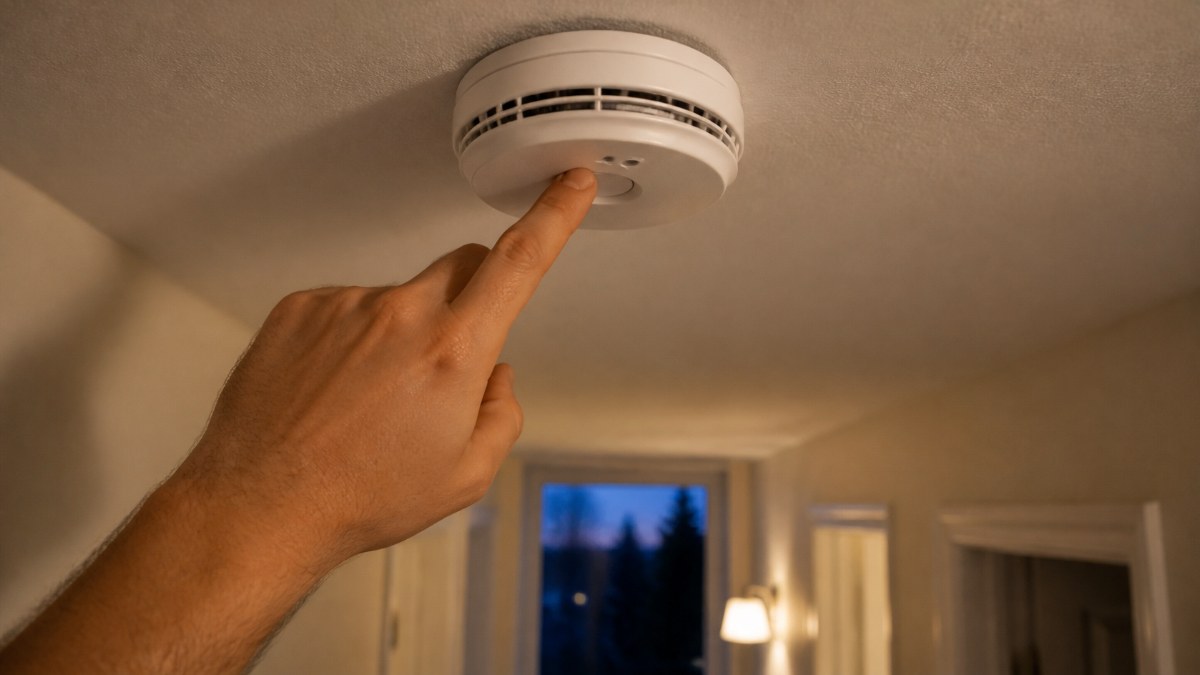
1. Test your smoke alarms (and check the date on the back)
Push the test button on every smoke alarm. If one doesn't sound, fix it today.
A few things most people don't know:
- The National Fire Protection Association (NFPA) recommends testing smoke alarms once a month, not just twice a year.
- Smoke alarms expire. NFPA says to replace them every 10 years, even if they still beep when you test them. The manufacture date is printed on the back.
- If your alarms use regular batteries, swap them at least once a year. The time change is a good time to do it.
- If they have a sealed 10-year battery and start chirping, replace the whole alarm.
- You should have one on every level of the home, including the basement, inside every bedroom and outside each sleeping area.
NFPA data shows almost 60% of home fire deaths happen in homes with no smoke alarms or none that work. That's a big number for something that takes five minutes to check.
2. Check your carbon monoxide alarms before the furnace runs nonstop
If your home has a gas furnace, gas water heater, fireplace or attached garage, you need working carbon monoxide (CO) alarms. CO has no smell and no color, and the CDC says more than 400 Americans die each year from unintentional CO poisoning that isn't tied to a fire.
- Test them the same day you test your smoke alarms.
- CO alarms wear out faster than smoke alarms. Many last about 5 to 7 years. Follow the date or end-of-life warning on yours.
- Put one outside each sleeping area and on every level.
- And if you haven't already, get the furnace inspected. A yearly check by an HVAC tech is the best way to catch a cracked heat exchanger or a venting problem before it becomes dangerous. Swap the furnace filter while you're at it.
3. Clean out the dryer vent, not just the lint trap
This one surprises people. Cleaning the lint trap after every load is great, but lint also builds up inside the vent pipe that runs to the outside of the house.
The U.S. Fire Administration estimates about 2,900 clothes dryer fires in homes each year, and the leading cause is failure to clean. Signs your vent needs attention: clothes taking longer than usual to dry, the dryer getting hot to the touch, or the outside vent flap not opening when the dryer runs.
You can clean the vent yourself with an inexpensive brush kit, or hire a dryer vent cleaning service. Once a year is a good rule.
4. Test for radon now that the windows are closed
Radon is a natural gas that comes up from the soil. You can't see it or smell it, and it's the second leading cause of lung cancer, according to the EPA.
This one matters around here. Greene and Montgomery counties are both in EPA's Zone 1, the highest-potential category for radon. The Ohio Department of Health estimates about half of Ohio families live in homes with elevated radon levels.
Greene County Public Health says winter is the best time to test, because homes are closed up and readings are more accurate. The county health department also notes that low-cost radon test kits are sold at big-box and home improvement stores. If your result comes back at or above the EPA action level of 4 pCi/L, a mitigation system can bring it down.
If you're planning to sell in the next year, testing now is smart. Radon tests are a common part of buyers' inspections in this area, and it's a lot better to know ahead of time than to find out in the middle of a deal.
5. Light up the outside of your house
With it getting dark around 5:30, a quick walk around the outside of the house after dark is worth it:
- Replace burned-out porch, garage and walkway bulbs. Timers, motion sensors or smart bulbs help a lot this time of year.
- Make sure your house numbers are easy to see from the street, day and night. Emergency responders need to find you fast.
- Check steps and railings for anything loose before they're covered in leaves, ice or snow.
Why this matters if you're buying or selling
When a home goes on the market, a lot of these items show up on the inspection report: expired or missing smoke and CO alarms, a dirty dryer vent, an overdue furnace, a high radon reading. They're mostly small fixes, but they add up and can make buyers nervous. Taking care of them now means fewer surprises later.
And if you're buying, these are great first-week jobs in a new house. You usually have no idea how old the alarms are.
The bottom line
Set aside an hour this week. Test the alarms, look at the dates, clean the dryer vent, order a radon kit and check the outside lights. It's one of the easiest things you can do to protect your family and your home.
If you have questions about what inspectors look for, or you're thinking about getting your house ready to sell, reach out. I'm always happy to help.
Frequently asked questions
When did daylight saving time end in 2026?
Sunday, Nov. 1, 2026, at 2 a.m., when clocks went back one hour.
How often should I replace smoke alarms?
Every 10 years, according to NFPA, even if they still work. Test them monthly.
How long do carbon monoxide alarms last?
Usually about 5 to 7 years. Follow the manufacturer's date or end-of-life warning.
Is radon a problem in the Dayton area?
Greene and Montgomery counties are both in EPA radon Zone 1, the highest-potential category. The only way to know your home's level is to test.
How often should a dryer vent be cleaned?
At least once a year, or sooner if clothes are taking longer to dry.
About Dylan Cassidy
Dylan Cassidy is a Realtor with Howard Hanna Real Estate Services based in Xenia, Ohio, and has been helping buyers and sellers since 2020. He grew up in Jamestown and serves the Miami Valley, including Xenia, Beavercreek, Fairborn, Jamestown, Kettering, Centerville, Bellbrook, Sugarcreek Township and Dayton.

Dylan Cassidy
Realtor | Dylan Cassidy | Howard Hanna Real Estate Services - Xenia
or another way